
A general-practice website, rebuilt around one specialty — now averaging two new leads a day.
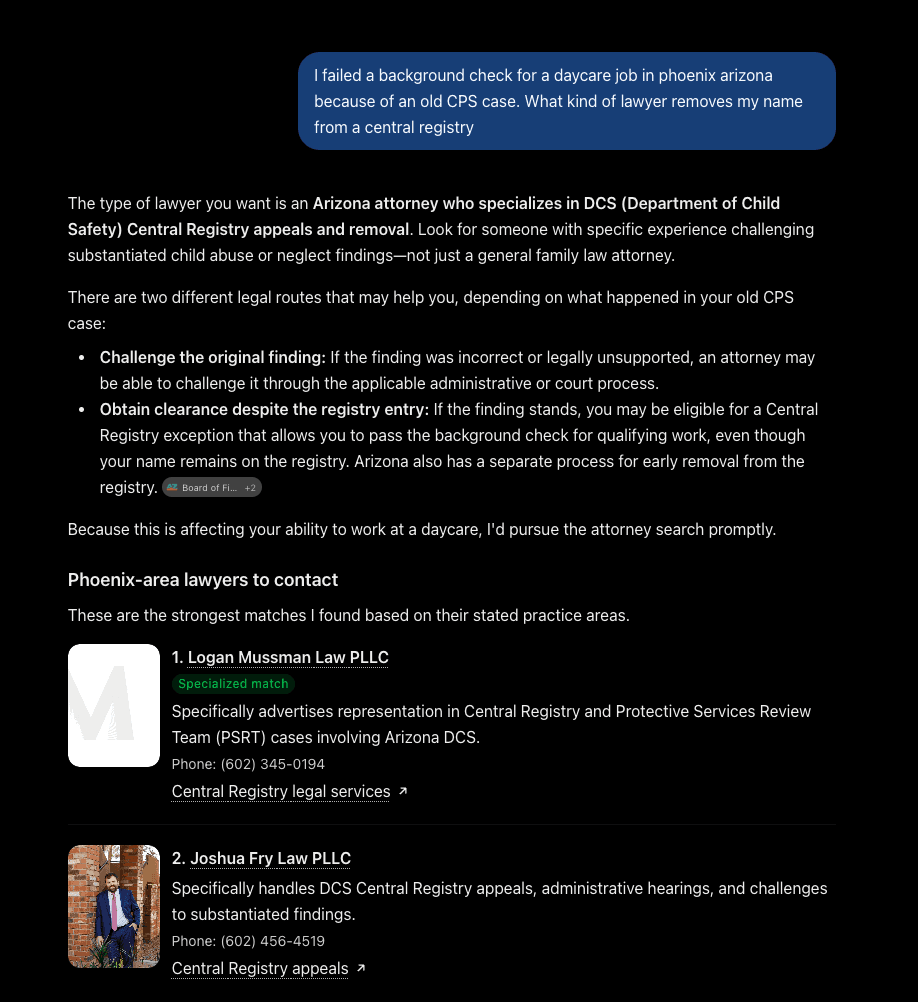
“The calls started the week we launched — people looking for the juvenile work I actually do. A few days later a client told me ChatGPT had sent them. They had searched for a delinquency lawyer. It more than paid for itself in those first few weeks. I'm happy with how the site looks. It reflects the practice. Max was great to work with — the attention he gave the details is in every page.”
Logan Mussman is a Phoenix attorney whose week is spent on juvenile law and child welfare. His old website introduced him as a general lawyer, so families in a hard moment — and the tools they use to look for help, including ChatGPT — had no reason to single him out. We rebuilt the site around that specialty. The calls followed.
A strong attorney, introduced as a general lawyer
Before this engagement, the website listed Logan the way a lot of firm sites do: a lawyer in Phoenix who could help with a little of everything. Broad sounds safe. In search, it reads as generic. A parent dealing with a DCS finding, a juvenile charge, or a fight over where a child will live was not being shown a reason to call him instead of anyone else.
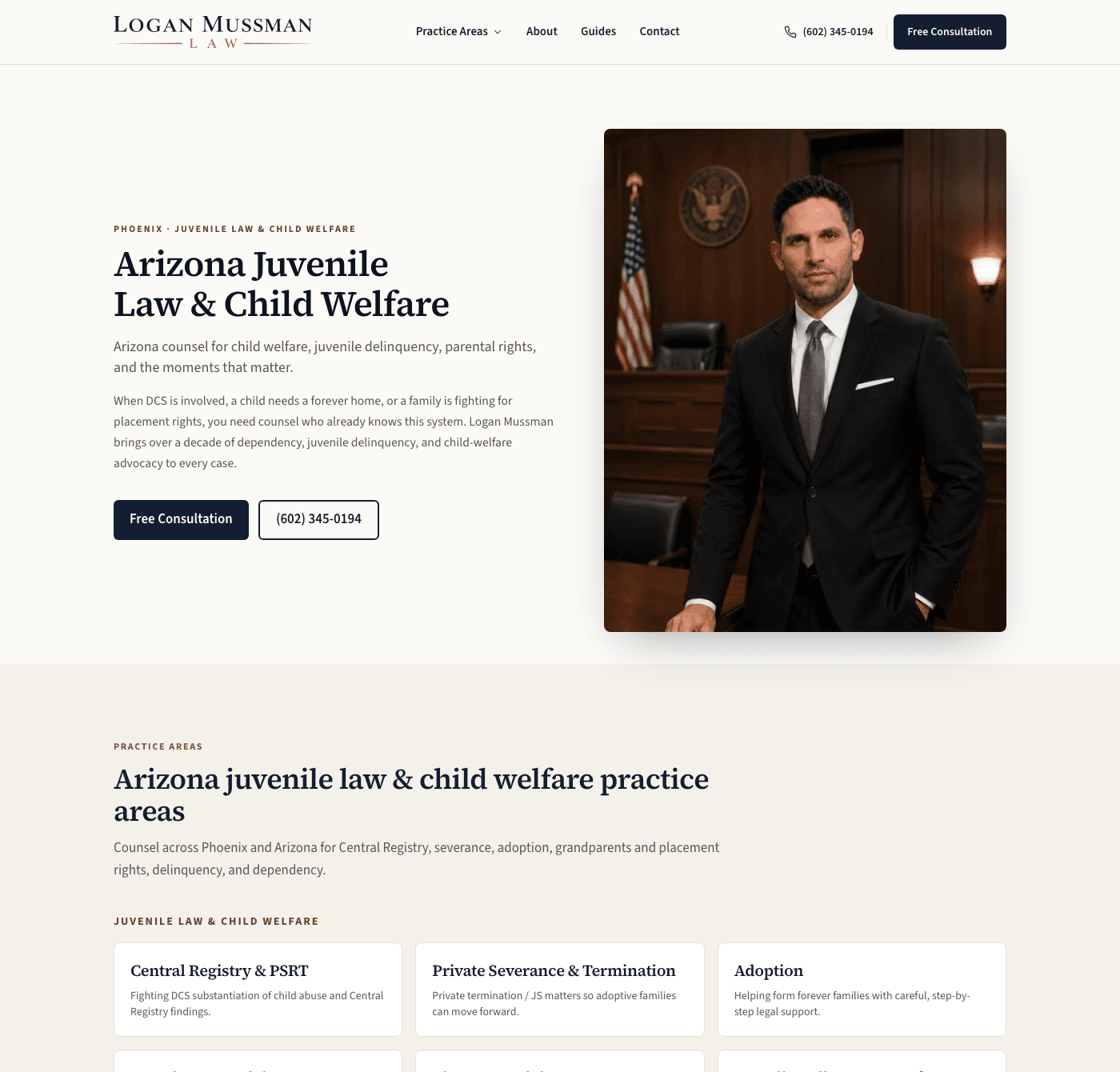
Pick a lane, and build the whole site around it
On the discovery call, the work that kept coming up was juvenile law and child welfare — dependency, delinquency, the Central Registry, adoption, and grandparents and placement rights. That became the lane. The new site says it in the headline, on every practice page, and in the way the firm is described. A visitor, Google, or ChatGPT should be able to tell what he is best at within a sentence.
- Seven child-welfare practice areas, each with its own page
- Personal injury kept available, and clearly set apart from the main story
- Copy written around the situations families are actually in
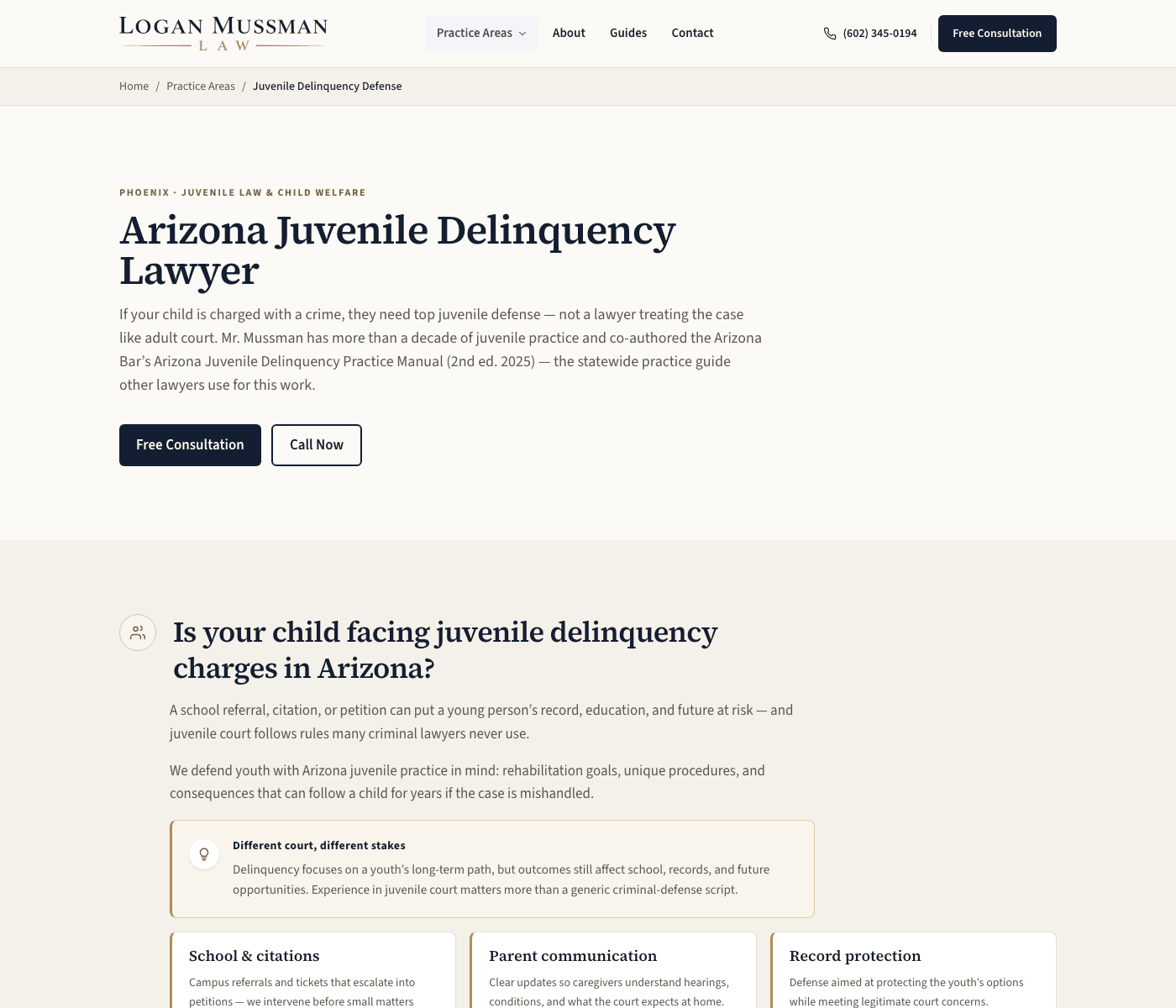
The Arizona Bar manual did a lot of the convincing
Logan co-authored the Arizona Juvenile Delinquency Practice Manual (2nd ed. 2025) for the Arizona Bar — the statewide guide other lawyers use for this work. That is specific, public proof of the specialty. We placed it on the delinquency page, in his credentials, and beside the consult form, so the positioning is backed by something a family (or a search engine) can check.
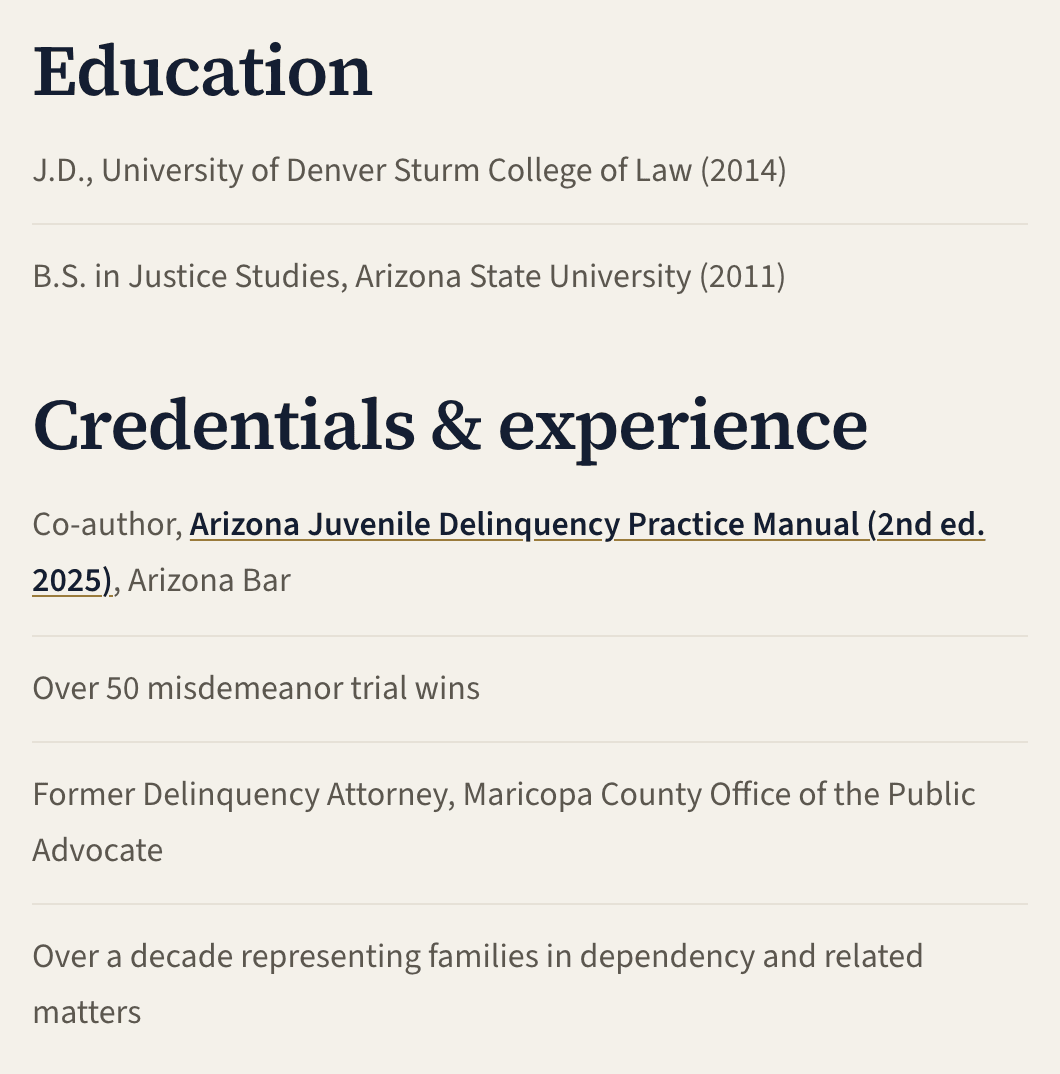
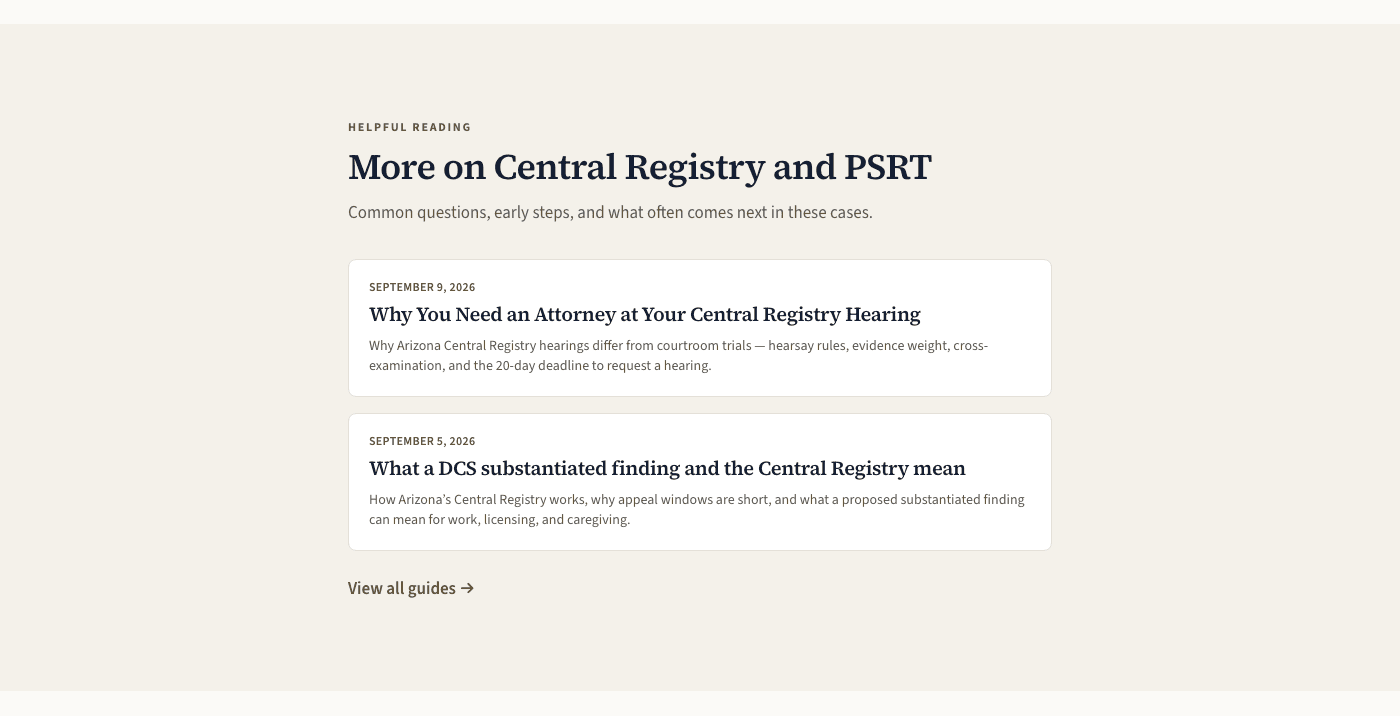
Guides attached to each practice area
Each practice area has guides for the questions families ask while they are still figuring out what they are facing. What a Central Registry finding means. How juvenile court differs from adult court. What a private severance case involves. Each guide lives on the practice page it belongs to, so that page shows his expertise and gives someone a useful next step in the same place.
- 10 guides, each tied to a practice area
- Shown on that practice page under Helpful reading
- Specific enough that Google and AI answers have a real page to cite
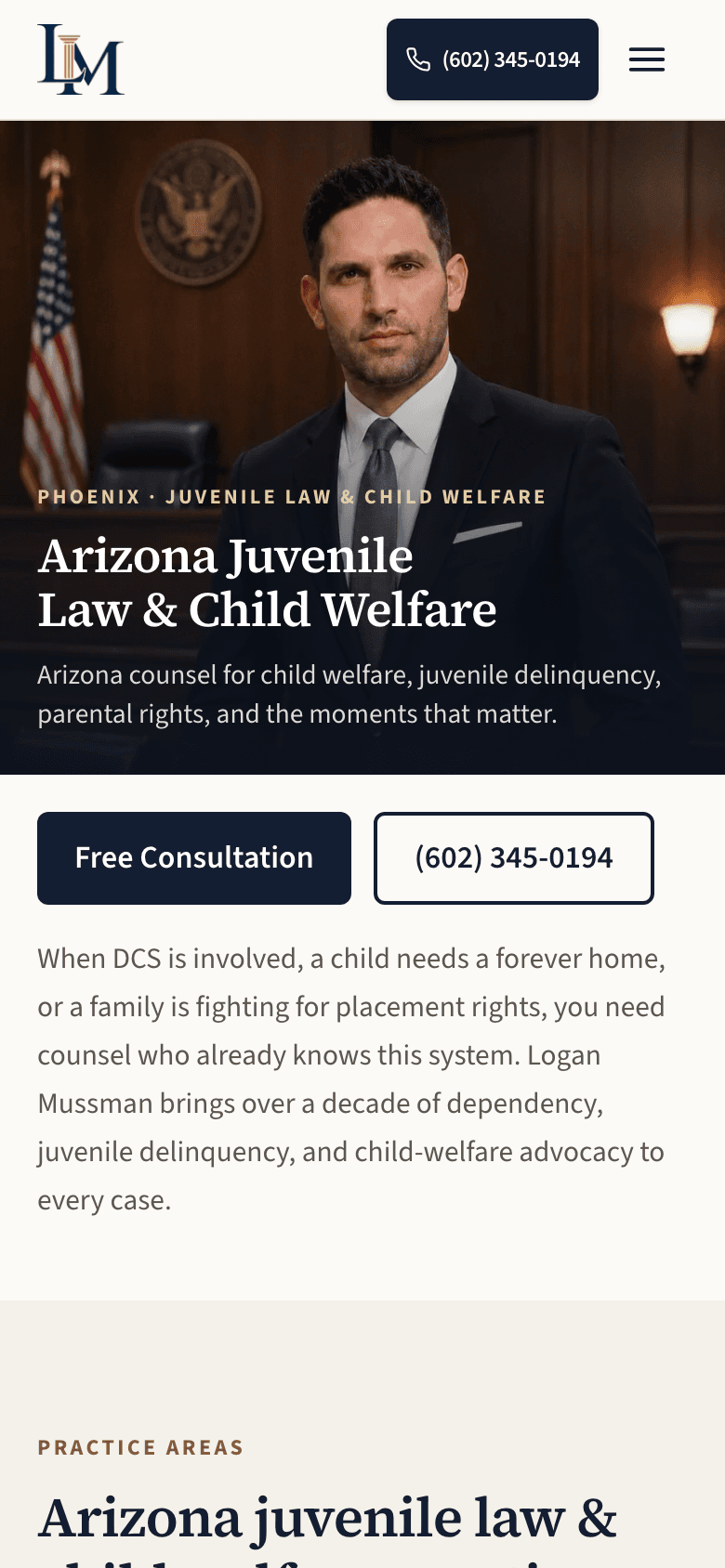
The same clarity on a phone as on a desktop
Most of these families are reading on a phone, often in a hurry. The specialty, the phone number, and the way to request a consult stay obvious on a small screen. The mobile layout is the same argument as the desktop site, just stacked so nothing important gets lost.
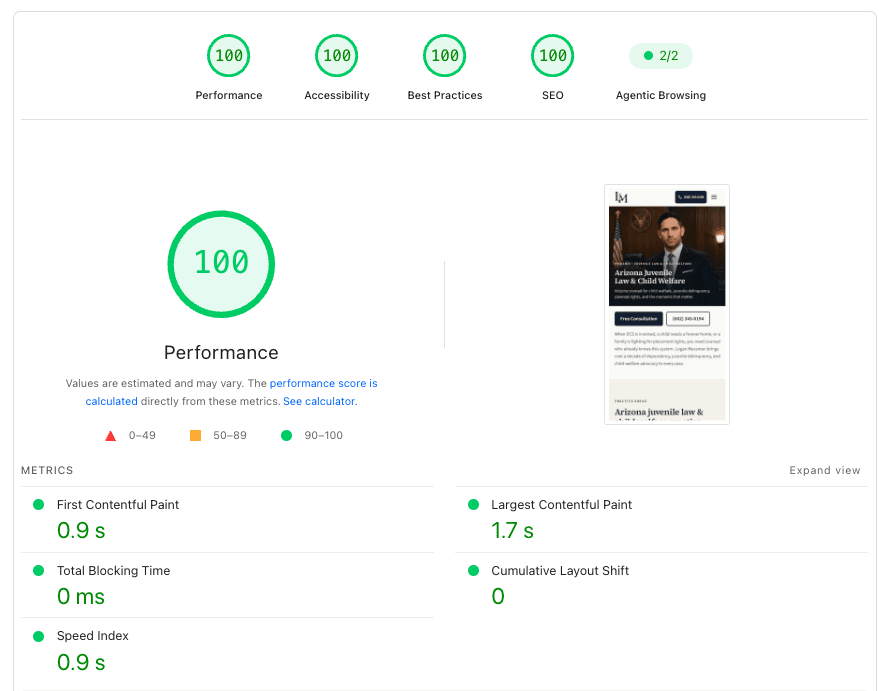
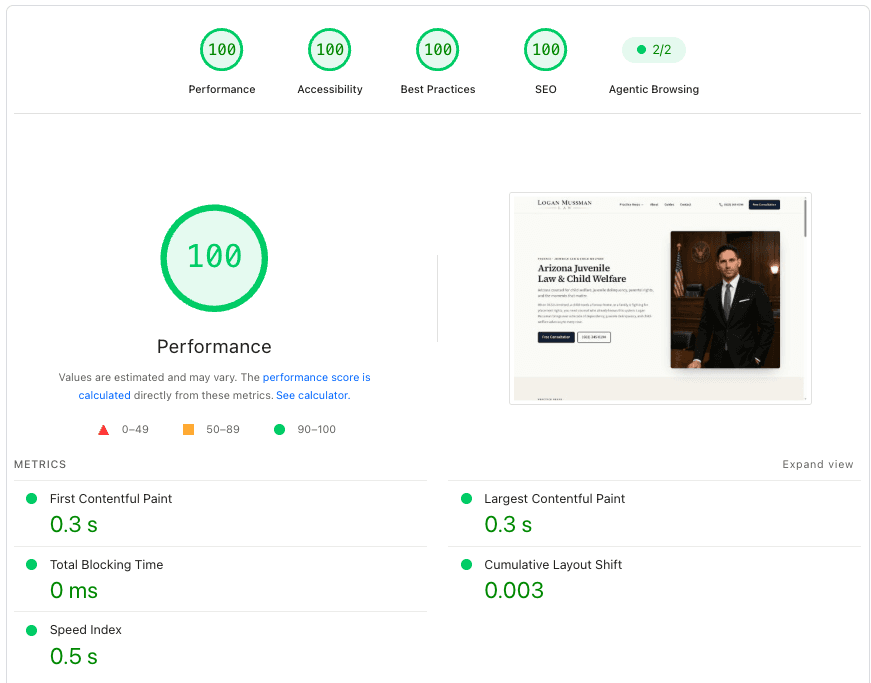
A perfect 100/100 on Google PageSpeed — mobile and desktop
Most websites never come close to this. A perfect PageSpeed score is rare, and Google has said site speed is part of how it decides who ranks. It also decides whether a worried parent stays long enough to call. Pages appear immediately, the next step is easy to find, and the site feels as considered as the practice behind it.
A site an AI can read — and recommend
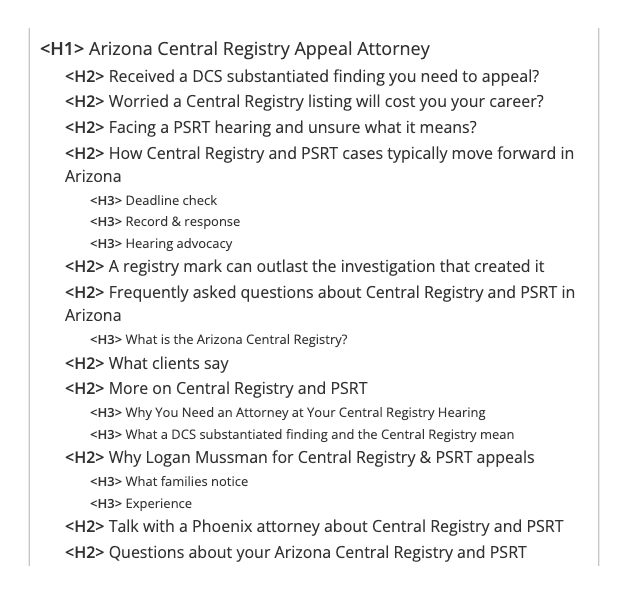
People now ask ChatGPT the question they used to type into Google. An answer is only as good as the page behind it. We built Logan's site so each page says one thing, in an order a model can follow: a single H1, H2s written as the questions families actually ask, and H3s for the steps underneath. The Central Registry page below is the whole pattern in one list. The same facts are repeated in structured data, so the firm, the attorney, and each practice are named entities — and the Google Business Profile is linked as the same business.
- One H1 per page, written as the search itself. The Central Registry page opens with “Arizona Central Registry Appeal Attorney”
- H2s are the situations families are in. H3s under them are the steps, the FAQ answers, and the guides for that matter
- Structured data on every page: the firm as a legal service, Logan as the attorney, each practice as its own service, FAQs, and each guide as an article tied back to that practice
- The Google Business Profile linked in that markup, in the footer, and on the contact page
Each practice page shows reviews about that exact work
Logan's Google reviews are tagged by matter, and each practice page shows the ones about that work. The Central Registry page quotes a client he kept off the DCS registry. The adoption pages quote families he walked through an adoption. A grandparent reading about placement sees a review about keeping grandkids out of a rushed DCS move. The praise lines up with the headline, which is what makes a visitor — and a model reading the page — believe the specialty is real.
The phone started ringing as soon as the site launched
Right after the new site went live, Logan saw a sharp jump in call volume. Many of those clients told him they found him through ChatGPT, the same kind of search that now lists the firm first for Central Registry work. He is now averaging two new leads every day.
- A new website built around juvenile law and child welfare
- A dedicated page for every practice area, written for how families search
- Co-author credit for the Arizona Bar manual, placed where it supports the specialty
- 10 guides attached to the practice areas they belong to
- A heading hierarchy on every page — one H1, situation H2s, and step-by-step H3s
- Structured data for the firm, the attorney, each practice, the FAQs, and the guides
- Google Business Profile linked in the markup, the footer, and the contact page
- Google reviews matched to each practice area, so the proof on the page is about that work
- A perfect 100/100 Google PageSpeed score, on mobile and desktop
- A mobile layout with the phone number and consult path always in reach
- A contact form that sends each lead straight to the firm
Ready to put your website to work? Let's talk.
We work with a small number of small businesses at a time. Tell us what you're trying to grow and we'll be in touch within one business day.